



The death of a loved one changes everything.
Families experience shock, sadness, and confusion at the same time.
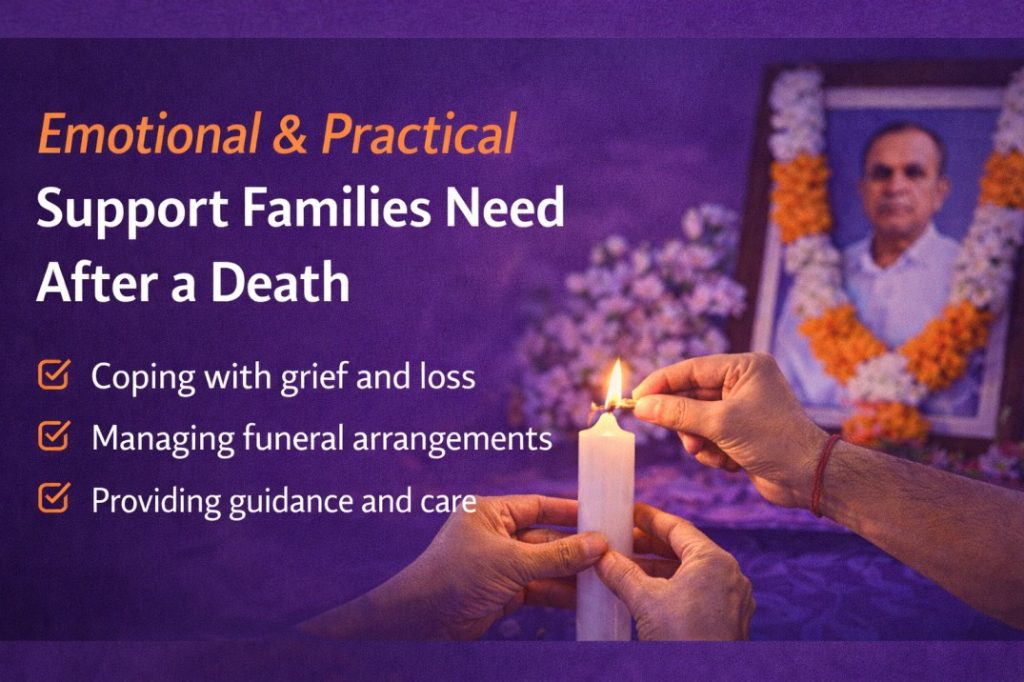
During this phase, emotional and practical support becomes essential.
Support helps families cope, decide calmly, and move forward step by step.
Understanding Emotional Support After a Death
Grief affects everyone differently.
Some people feel numb, while others feel overwhelmed.
Emotional support means:
Listening without judgment
Offering presence instead of advice
Allowing space for emotions
Families need reassurance.
They need to know they are not alone.
Why Emotional Support Matters So Much
Grief can feel isolating.
However, shared support reduces emotional pressure.
Support helps families:
Express feelings safely
Avoid emotional burnout
Begin the healing process
Simple gestures often matter the most.
Kind words and patience bring comfort.
Practical Support Is Equally Important
Along with grief, responsibilities increase suddenly.
Many decisions must be made quickly.
Practical support includes:
Guidance on what to do first
Help with funeral arrangements
Assistance with documentation
Without help, families feel overwhelmed.
Therefore, practical guidance is critical.
Immediate Practical Needs After a Death
In the first few hours, families need clarity.
Uncertainty increases stress.
Key practical needs include:
Confirming death through a doctor
Arranging body transportation
Deciding on rituals and final rites
Support during this stage prevents confusion.
It helps families stay focused.
Support With Funeral Arrangements
Funeral planning involves many steps.
Each step requires coordination.
Support includes:
Ambulance or hearse services
Freezer box arrangements, if needed
Cremation or burial planning
Ritual coordination
Professional assistance ensures dignity.
As a result, families feel relieved.
Help With Legal and Documentation Tasks
Paperwork often feels difficult during grief.
However, it cannot be avoided.
Important documents include:
Death certificate
Hospital papers
Police permissions, in some cases
Support with documentation reduces stress.
It also prevents future legal issues.
Long-Term Support After the Funeral
Support should not stop after last rites.
Families continue to grieve.
Long-term support may include:
Help with post-funeral rituals
Guidance for elderly family members
Emotional reassurance
Healing takes time.
Continuous support makes the journey easier.
How Professional Support Helps Families
Professional funeral services combine emotional and practical care.
They guide families step by step.
Such support:
Reduces decision fatigue
Maintains dignity and respect
Allows families to focus on healing
This balance is essential during loss.
❓ Frequently Asked Questions (FAQs)
1. Why are professional funeral services important during loss?
Professional funeral services provide guidance, structure, and emotional support, helping families manage arrangements with dignity during a difficult time.
2. What services do professional funeral providers usually offer?
They offer body transportation, freezer box services, ritual coordination, cremation or burial arrangements, and documentation support.
3. Do professional funeral services handle religious rituals?
Yes, experienced providers understand different religious traditions and arrange rituals according to family and cultural preferences.
4. How do funeral services reduce stress for families?
By managing logistics, paperwork, and coordination, funeral services allow families to focus on grief, prayers, and emotional healing.
5. Are professional funeral services available 24×7?
Many funeral service providers operate 24×7 to support families during emergencies, including nights and holidays.
6. Is documentation assistance included in funeral services?
Yes, most professional services help families with death certificates, hospital papers, and legal permissions when required.
7. How do professional funeral services ensure dignity and respect?
They follow trained procedures, respectful handling, and cultural sensitivity at every stage of the funeral process.