

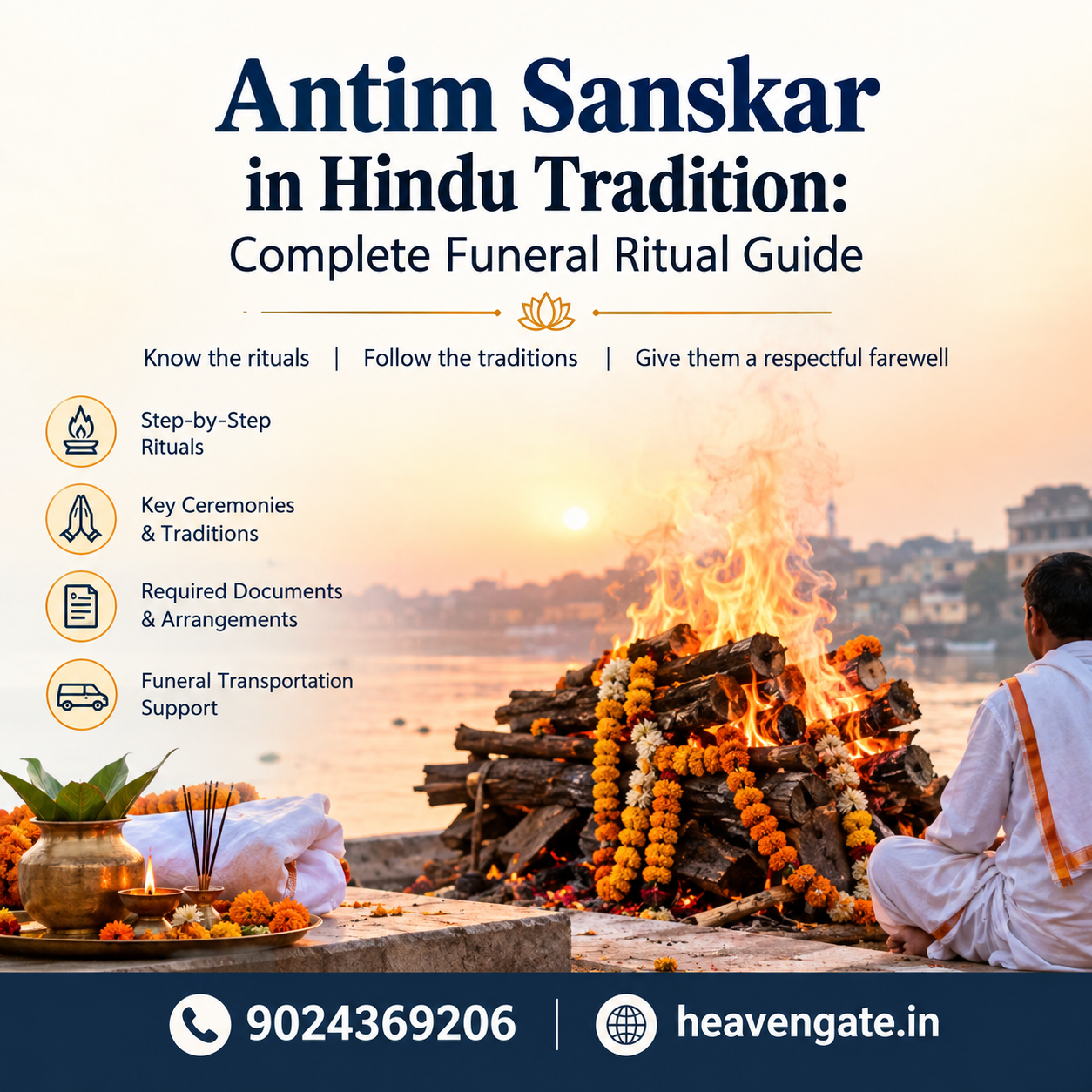

Antim Sanskar in Hindu tradition refers to the final rites performed after a person’s death. These rituals help families pay their respects and honour the life of their loved one.
Hindu funeral customs vary by region, family tradition, and religious beliefs. However, many families perform prayers, prepare the body for the final journey, and arrange cremation.
During this difficult time, families may also need help with transportation, documentation, and cremation arrangements.
This guide explains common Hindu funeral rituals, their purpose, and practical arrangements. It also covers how families in Jaipur can arrange respectful funeral support.
What Is Antim Sanskar?
The word Antim Sanskar means the final sacrament or last rite. Many Hindu traditions regard it as an important duty toward a deceased family member.
Hindu beliefs and customs differ. Some families focus on prayers and Vedic rituals, while others follow regional practices passed down through generations.
In many Hindu traditions, cremation forms the central part of the final rites. Families may also arrange prayers and remembrance ceremonies before or after cremation.
The main purpose is to honour the deceased and support the family through the farewell process.
Importance of Antim Sanskar in Hinduism
Antim Sanskar carries spiritual, cultural, and emotional significance for many Hindu families.
Honouring the Deceased
The final rites allow relatives to pay their respects and remember the person’s life.
Following Family Traditions
Families may follow rituals taught by elders or guided by a priest.
Offering Prayers
Prayers and mantras can provide comfort and express the family’s religious beliefs.
Supporting the Grieving Family
Gathering with relatives and community members can help families through their loss.
Completing the Final Rites
Cremation and related customs provide a structured farewell according to the family’s beliefs.
Hindu Antim Sanskar Rituals: Step-by-Step Guide
The exact sequence varies across Hindu communities. However, many families follow several common stages.
1. Arrangements After Death
First, the family confirms the death and completes the necessary formalities.
If the death occurs in a hospital, staff explain the discharge and documentation process. In other situations, the family may need to contact the appropriate medical or local authorities.
Next, relatives inform close family members and begin funeral arrangements.
Families in Jaipur may also arrange a suitable vehicle through a [Dead Body Transportation Service in Jaipur].
2. Preparing the Body
Many Hindu families prepare the deceased according to their customs.
The family may clean the body, dress the deceased in appropriate clothing, and place flowers or other traditional items nearby.
Practices vary by community and family preference. Therefore, relatives may consult elders or a priest for guidance.
If cremation cannot happen immediately, families may need temporary preservation support.
A [Freezer Box Service in Jaipur] can help families arrange temporary preservation at home or another suitable location.
3. Gathering of Family Members
Relatives and friends often gather to pay their respects.
During this time, the family may offer prayers, recite religious verses, or remember the deceased.
Some families arrange a brief prayer at home before moving the body to the cremation ground.
Meanwhile, relatives can coordinate transportation and confirm the cremation arrangements.
4. Antim Yatra: The Final Journey
Many Hindu families arrange an Antim Yatra, or final journey, from the home or hospital to the cremation ground.
Family members may accompany the deceased. Some families recite prayers or chant religious phrases during the journey.
The vehicle depends on the family’s requirements and the distance.
A [Hearse Van Service in Jaipur] can help transport the deceased respectfully. For longer routes, a [Mortuary Van Service in Jaipur] may provide more suitable facilities.
5. Reaching the Cremation Ground
After reaching the cremation ground, the family follows the facility’s entry and registration procedure.
Staff may check the required documents before allowing cremation.
Families should confirm the cremation method, timing, and charges in advance. Some facilities offer traditional wood cremation, while others may provide electric cremation.
For local guidance, read [Cremation Services in Jaipur] and [Electric Crematorium in Jaipur].
6. Hindu Cremation Rituals
Cremation practices vary across Hindu traditions.
In many families, a priest or senior relative guides the rituals. The family may offer prayers, perform customary rites, and complete the cremation according to its beliefs.
Some traditions include a ritual known as Mukhagni, in which a designated family member performs a symbolic or formal role in beginning the cremation.
However, the person responsible and the exact procedure depend on the family’s customs.
Families should follow the guidance of their priest and the crematorium staff.
7. Collection of Ashes
After cremation, families may collect the ashes and remains according to the crematorium’s procedure.
Many Hindu families perform Asthi Visarjan, which involves immersing the ashes in a sacred river or another customary location.
The timing and method vary by tradition.
Families should ask the crematorium about collection procedures and any local requirements.
8. Prayers and Remembrance Ceremonies
After cremation, many Hindu families perform additional prayers and remembrance rituals.
These may include prayers at home, offerings, or ceremonies guided by a priest.
The family may also observe mourning customs for a period determined by its tradition.
Some families perform Shraddha or related rites to honour their ancestors. Practices differ by region, community, and religious interpretation.
Common Hindu Funeral Rituals and Their Meaning
| Ritual | Common Purpose |
|---|---|
| Preparing the body | Respectful preparation for the final journey |
| Prayers and mantras | Spiritual reflection and remembrance |
| Antim Yatra | Final journey to the cremation ground |
| Mukhagni | A customary role in the cremation ritual in some traditions |
| Cremation | The final rite followed by many Hindu communities |
| Asthi Visarjan | Immersion of ashes according to family tradition |
| Shraddha | Ancestral remembrance rites in many traditions |
These descriptions provide a general overview. Families should follow their own customs and religious guidance.

Documents and Arrangements for Hindu Funeral Rites
Funeral arrangements may require practical preparation alongside religious rituals.
Families should confirm the necessary paperwork with the hospital, crematorium, or relevant authorities.
Commonly requested items may include:
- Death certificate or relevant death documentation
- Identification documents
- Hospital discharge papers, where applicable
- Crematorium registration details
- Additional documents required by local authorities
In cases involving accidental or unnatural death, additional legal formalities may apply.
Therefore, confirm the requirements before arranging transportation.
Antim Sanskar Services in Jaipur
Families in Jaipur may need support with transportation, cremation coordination, and other arrangements.
Heaven Gate provides related funeral support services, including:
- Hearse Van Service in Jaipur
- Mortuary Van Service in Jaipur
- Dead Body Transportation in Jaipur
- Freezer Box Service in Jaipur
- Moksh Vahini Service in Jaipur
- Funeral Coordination
- Cremation Support
The appropriate service depends on the family’s location, timing, and requirements.
You can also explore [Antim Sanskar Services in Jaipur] for related funeral assistance.
Choosing a Vehicle for the Final Journey
The right vehicle depends on the route and preservation requirements.
Hearse Van
A hearse van can support local transportation from a home or hospital to a cremation ground.
Mortuary Van
A mortuary van may suit longer journeys or cases that require preservation facilities.
Moksh Vahini
Some families prefer a dedicated funeral vehicle for the final journey.
Before booking, confirm availability, pickup time, route, and charges.
For more details, visit [Hearse Van Service in Jaipur], [Mortuary Van Service in Jaipur], and [Moksh Vahini in Jaipur].
What If Cremation Must Wait?
Sometimes, cremation cannot happen immediately. Relatives may be travelling from another city, or the family may need to complete formalities.
In such situations, families should discuss suitable preservation arrangements.
A freezer box can provide temporary preservation when installed and used appropriately.
The family should also confirm the expected rental duration and total charges.
How to Arrange Antim Sanskar in Jaipur
Families can follow these steps to organize the final rites.
- Complete the necessary death-related formalities.
- Inform close relatives and family members.
- Consult elders or a priest about customary rituals.
- Confirm the cremation ground and available timing.
- Arrange a suitable hearse or mortuary vehicle.
- Prepare the required documents.
- Confirm the charges for transportation and cremation.
- Arrange temporary preservation if needed.
- Complete the rituals according to the family’s tradition.
Planning these details early can reduce last-minute pressure.
Antim Sanskar Customs Across Hindu Communities
Hindu funeral customs are not identical across India.
For example, families may follow different rituals in Rajasthan, Gujarat, Maharashtra, Uttar Pradesh, Bengal, South India, and other regions.
Some differences include:
- Clothing and preparation customs
- Prayer methods
- The role of the priest
- The family member who performs specific rites
- Cremation procedures
- Mourning periods
- Asthi Visarjan arrangements
Therefore, families should not assume that every ritual applies to every Hindu community.
The best approach is to follow the family’s religious tradition and consult a trusted priest when necessary.
Common Mistakes to Avoid During Antim Sanskar Arrangements
Not Confirming the Cremation Ground
Call ahead to confirm availability and timings.
Delaying Transportation Arrangements
Book a suitable vehicle as early as possible.
Overlooking Documents
Ask the hospital or crematorium which documents the family needs.
Assuming Every Ritual Is Universal
Customs differ between families and communities.
Ignoring Preservation Needs
If cremation gets delayed, discuss suitable preservation options.
Not Confirming Costs
Ask for a clear quotation covering transportation and any additional services.
Internal Linking Suggestions
Service Pages
Related Blog Posts
Frequently Asked Questions
1. What does Antim Sanskar mean in Hindu tradition?
Antim Sanskar means the final rites performed after death. These rituals honour the deceased and follow the family’s religious and cultural customs.
2. What are the main Hindu funeral rituals?
Common practices include preparing the body, offering prayers, arranging the final journey, performing cremation, collecting ashes, and completing customary remembrance rites. Practices vary by community.
3. Who performs the Hindu cremation rituals?
A priest or senior family member may guide the rituals. The person responsible for specific rites depends on the family’s customs.
4. What is Mukhagni in Hindu funeral customs?
Mukhagni refers to a customary role in beginning the cremation ritual in some Hindu traditions. The exact procedure and person responsible vary by community.
5. What is Asthi Visarjan?
Asthi Visarjan involves immersing the ashes and remains after cremation in accordance with the family’s tradition.
6. What documents are needed for Antim Sanskar in Jaipur?
Requirements can vary. Families may need death-related documentation, identification, hospital papers, and documents requested by the crematorium or local authorities.
7. Can a hearse van be arranged for Antim Sanskar in Jaipur?
Yes. Families can arrange a suitable hearse van to transport the deceased from a home or hospital to the cremation ground.
8. What if the family needs to delay cremation?
The family should confirm the cremation timing and arrange suitable preservation support if required. A freezer box may help provide temporary preservation.
9. Are Hindu Antim Sanskar rituals the same across India?
No. Rituals differ by region, community, family tradition, and religious interpretation.
10. Does Heaven Gate provide Antim Sanskar support in Jaipur?
Heaven Gate provides related funeral support, including hearse vans, mortuary vans, dead body transportation, freezer boxes, Moksh Vahini, and funeral coordination.