

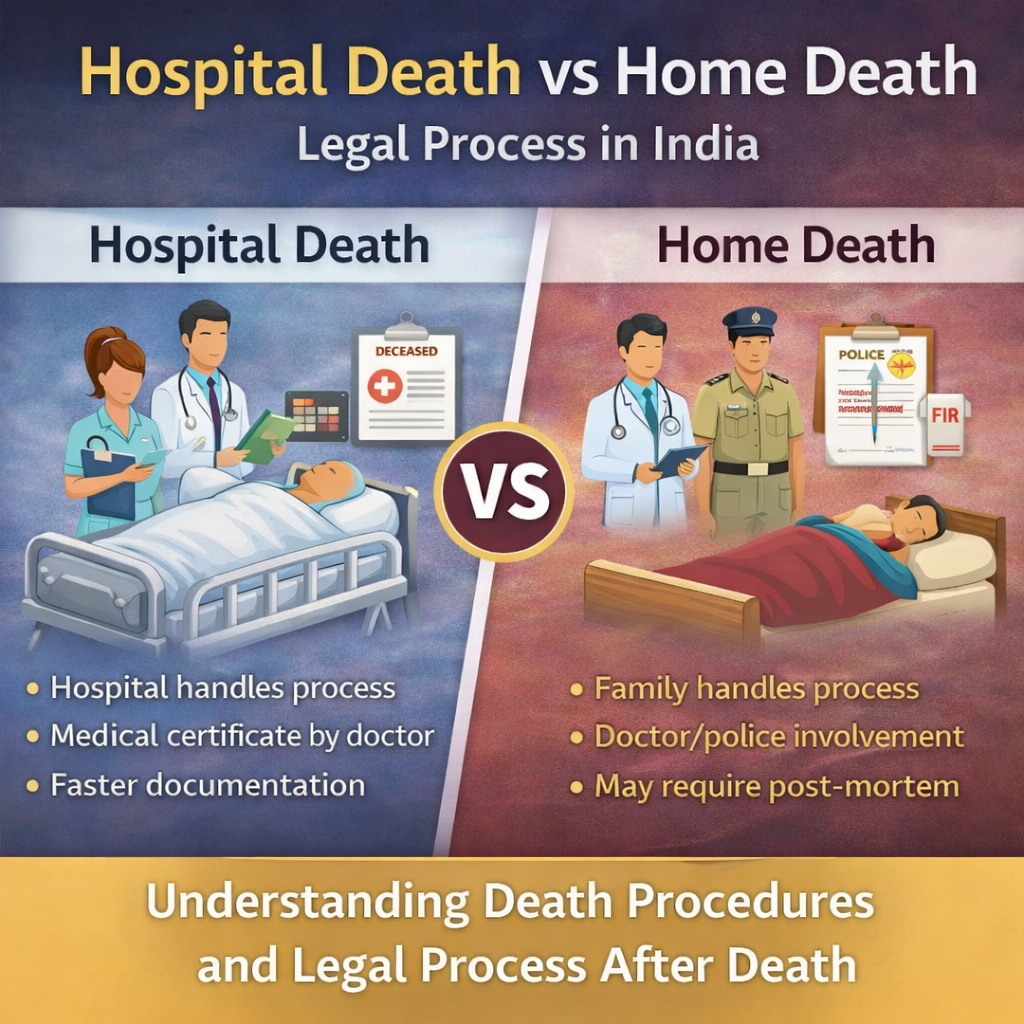

The legal process after death depends on where the death occurs. However, many families remain unaware of the difference between hospital death and home death procedures. This awareness guide explains the legal process clearly to help families act without confusion.
Understanding Hospital Death
A hospital death follows a structured legal process. Therefore, families usually face fewer procedural delays.
What Is Considered a Hospital Death?
A hospital death occurs when a person passes away while admitted to a hospital or nursing facility. Medical staff handle most formalities immediately.
Legal Process After Hospital Death
First, the attending doctor confirms the death. Then, the hospital issues a medical certificate stating the cause of death.
Next, the hospital informs the local authority. After that, families apply for the official death certificate from the municipal office.
As a result, documentation becomes faster and smoother.
Documents Issued in Hospital Death
Hospitals usually provide:
Medical Certificate of Cause of Death
Hospital death summary
Discharge or death intimation slip
These documents help families complete further formalities easily.

Understanding Home Death
A home death requires additional legal steps. Therefore, families must act carefully and promptly.
What Is Considered a Home Death?
A home death occurs when a person passes away at their residence. This includes natural death, sudden death, or long-term illness cases.
Legal Process After Home Death
First, inform a registered medical practitioner. The doctor visits the home to confirm death.
If the doctor can certify natural death, they issue a medical certificate. However, if the cause remains unclear, families must inform the local police.
Therefore, authorities decide whether further investigation is needed.
Police Involvement in Home Death
Police involvement depends on circumstances.
When Police Are Not Required
Death due to known illness
Death under medical supervision
When Police Are Required
Sudden or unexplained death
Accidental death
Suicide or suspicious cases
In such cases, police may request a post-mortem.
Death Certificate Process: Hospital vs Home
The death certificate remains mandatory in both cases. However, the application process differs slightly.
Hospital Death Certificate Process
Hospitals provide supporting documents. Therefore, municipal authorities issue the certificate quickly.
Home Death Certificate Process
Families submit doctor certification or police clearance. Consequently, the process may take longer.
Transportation and Last Rites Permission
Transportation rules apply to both situations.
Hospital Death
Hospitals release the body after documentation. Families arrange ambulance or hearse services easily.
Home Death
Families must obtain clearance first. After approval, transportation and last rites can proceed.

Common Mistakes Families Should Avoid
Many families unknowingly delay procedures.
Mistakes to Avoid
Moving the body before confirmation
Delaying doctor or police intimation
Missing documentation
Relying on incorrect advice
Therefore, awareness prevents unnecessary stress.
Key Differences Between Hospital Death and Home Death
| Aspect | Hospital Death | Home Death |
|---|---|---|
| Medical confirmation | Immediate | Doctor visit required |
| Police involvement | Rare | Case-dependent |
| Documentation speed | Faster | Slower in some cases |
| Post-mortem | Uncommon | Possible |
| Family responsibility | Limited | Higher |
Why Legal Awareness Matters
Legal clarity helps families act confidently. Moreover, it prevents complications during cremation, burial, insurance claims, and property matters.
Timely action ensures dignity and compliance.
Final Thoughts
Understanding the difference between hospital death and home death legal processes helps families prepare better. Although emotions run high, correct knowledge reduces delays and confusion. Awareness remains the key to handling this difficult phase with dignity and peace.
❓ FAQs – Hospital Death vs Home Death Legal Process
1. What is the main legal difference between hospital death and home death?
In a hospital death, medical staff handle death confirmation and documentation. In a home death, families must inform a doctor or authorities themselves.
2. Is police involvement required in all home deaths?
No, police involvement is required only in sudden, accidental, or suspicious deaths. Natural deaths certified by a doctor usually do not need police clearance.
3. Who issues the medical certificate in a hospital death?
The attending hospital doctor issues the medical certificate stating the cause of death immediately after confirmation.
4. Can a doctor issue a death certificate for a home death?
Yes, a registered doctor can issue a medical certificate if the death is natural and the cause is clear.
5. Does the death certificate process differ for hospital and home deaths?
Yes, hospital deaths usually receive faster certification. Home deaths may take longer if police verification or post-mortem is required.
6. Is post-mortem mandatory in home deaths?
No, post-mortem is not mandatory for natural deaths. Authorities request it only when the cause of death is unclear or suspicious.
7. Can funeral or cremation proceed without legal clearance?
No, legal clearance and required documents must be completed before cremation, burial, or body transportation.