

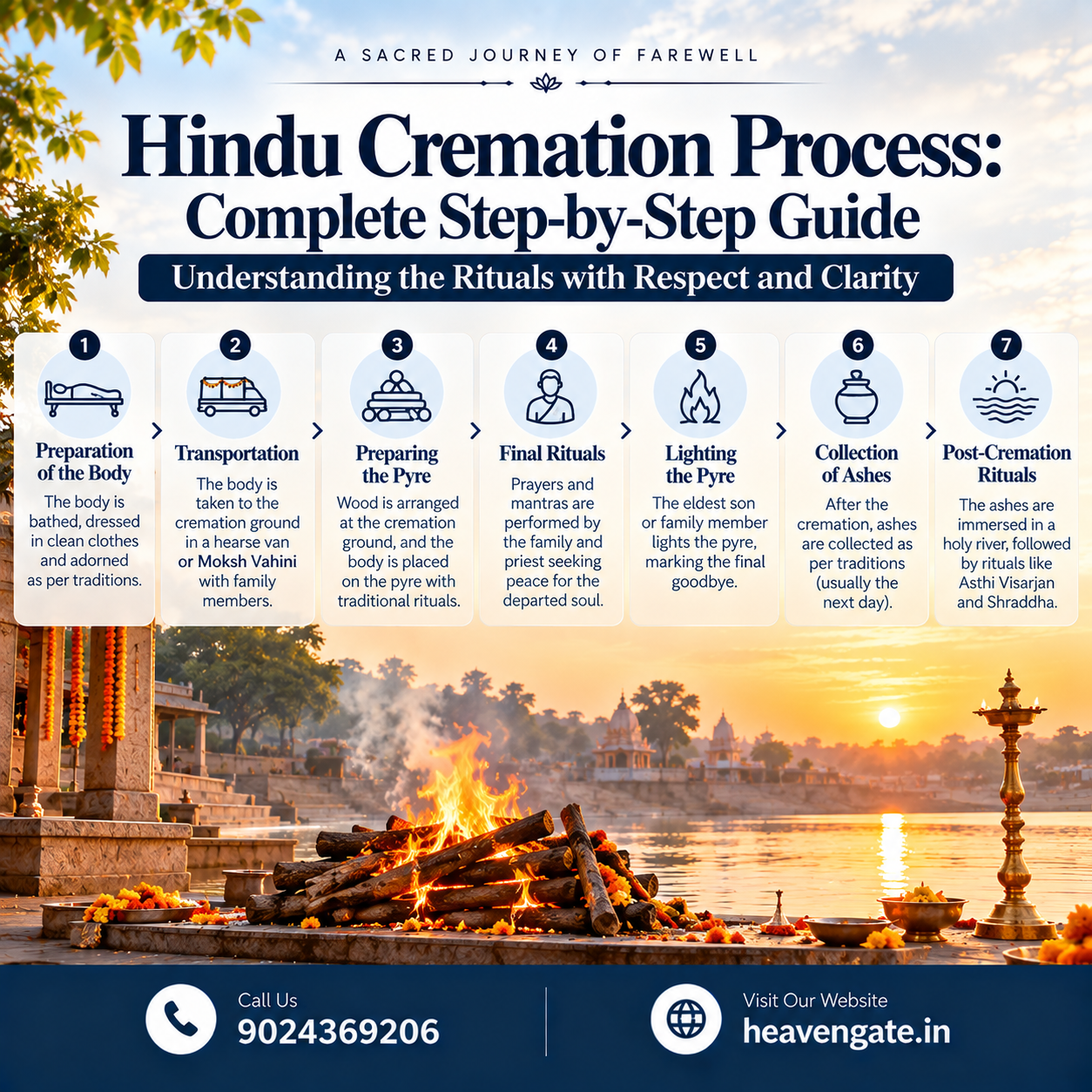

The Hindu cremation process follows several traditional steps. These rituals help families perform the final rites with respect and care.
However, customs can differ between families, regions, and communities. Therefore, families should follow their traditions and consult their priest when needed.
This guide explains the common Hindu cremation process. It also covers funeral transportation and cremation arrangements in Jaipur.
What Is the Hindu Cremation Process?
Hindu cremation, also called Antim Sanskar, represents the final rites after death.
Many Hindu traditions consider cremation an important part of the journey of the soul. Families perform prayers and rituals before, during, and after cremation.
The exact rituals may vary. Nevertheless, most families follow a similar sequence.
The process usually includes:
- Preparing the deceased
- Informing close relatives
- Arranging funeral transportation
- Performing prayers and rituals
- Taking the body to the cremation ground
- Completing the cremation
- Collecting the ashes
- Performing post-cremation rituals
Step 1: Preparing the Deceased
The family usually prepares the deceased before the final journey.
Family members may clean the body according to their customs. They may also dress the deceased in clean or traditional clothing.
Some families place flowers, sacred items, or religious symbols according to their beliefs.
A priest may guide the family during these preparations.
If transportation is required from a hospital or residence, families can arrange a [Hearse Van Service in Jaipur].
Step 2: Placing the Body for Final Rites
The family places the deceased on a suitable bier or stretcher.
Relatives may gather around the deceased and offer prayers.
The family may perform specific rituals according to their community traditions.
At this stage, relatives also prepare for the funeral procession.
Step 3: Arranging Funeral Transportation
The family then arranges transportation to the cremation ground.
A hearse van provides a suitable option for this journey. It allows families to transport the deceased respectfully.
The starting point may be a home, hospital, nursing facility, or another location.
For families in Jaipur, professional [Funeral Transportation Services in Jaipur] can help coordinate the journey.
Heavengate also provides [Dead Body Transportation in Jaipur] for families who need transportation support.
Step 4: Funeral Procession
The family and relatives accompany the deceased to the cremation ground.
Some families walk with the procession. Others use vehicles depending on the distance and circumstances.
Relatives may chant prayers or religious verses during the journey.
However, customs can differ significantly between communities.
Therefore, families should follow their established traditions.
Step 5: Reaching the Cremation Ground
After reaching the cremation ground, the family completes the required arrangements.
The priest may guide the family through the next rituals.
The family may place the deceased near the cremation area.
At this point, the cremation ground staff can help with basic arrangements, depending on the facility.
Families in Jaipur can learn more through our [Cremation Services in Jaipur].
Step 6: Performing Final Rituals
The family performs several final rituals before cremation.
These rituals can include prayers, offerings, and ceremonial practices.
The exact sequence depends on the family’s customs.
The eldest son traditionally performs several important rites in many Hindu communities. However, modern families may follow different practices.
Therefore, the priest usually guides the family based on their traditions.
Step 7: Lighting the Funeral Pyre
In traditional Hindu cremation, the family prepares a funeral pyre using wood.
The designated family member performs the final ritual and lights the pyre.
This ritual marks the beginning of the cremation.
The family may continue prayers during this stage.
However, some families choose an electric crematorium instead of a traditional wood pyre.
You can read our guide on [Electric Crematorium in Jaipur] to understand the process and available arrangements.
Step 8: Electric Cremation
Electric cremation provides another option for Hindu funeral arrangements.
Instead of a traditional wood pyre, the facility uses an electric cremation chamber.
Families should confirm the availability of this facility before reaching the cremation ground.
The process and charges can vary by location.
Therefore, advance confirmation can help families avoid delays.
Step 9: Completing the Cremation
The cremation continues until the process reaches completion.
Family members may wait at the cremation ground or return home according to their traditions.
The timing can vary based on the cremation method and other factors.
The cremation ground staff may provide guidance about the next steps.
Step 10: Collecting the Ashes
After cremation, the family may collect the remaining ashes and bone fragments.
This ritual is commonly known as Asthi Sanchay.
Families usually place the ashes in a suitable container.
The family may later perform Asthi Visarjan according to their religious traditions.
Many families take the ashes to a sacred river or another designated location.
Step 11: Asthi Visarjan
Asthi Visarjan involves immersing the ashes in water.
Families may choose a sacred river or another religious location.
The timing can vary according to family customs and priestly guidance.
Some families complete this ritual shortly after cremation. Others may wait for a specific day.
Therefore, families should follow their traditional practices.
Step 12: Post-Cremation Rituals
Hindu families may perform several rituals after cremation.
These can include:
- Prayer ceremonies
- Pind Daan
- Shraddha rituals
- Asthi Visarjan
- Family remembrance ceremonies
The rituals can vary based on region, caste, family tradition, and religious practice.
A priest can provide appropriate guidance for the family.

Hindu Cremation Process in Jaipur
Families in Jaipur can access different cremation facilities across the city.
The suitable option depends on the family’s location and preferred arrangements.
For example, families may consider factors such as:
- Distance from home
- Cremation method
- Facility availability
- Operating hours
- Transportation access
- Funeral requirements
Before travelling, confirm the cremation ground’s current arrangements.
You can also read our guide on [Best Cremation Grounds in Jaipur] for additional information.
Documents Required for Hindu Cremation
Documentation requirements can vary depending on the circumstances.
Families may need documents related to the death and identification.
Common documents can include:
- Death certificate or medical documentation
- Identification documents
- Hospital documents, when applicable
- Required permissions or authorizations
Families should confirm the exact requirements with the relevant authority.
Role of a Priest in Hindu Cremation
A Hindu priest can guide the family through traditional funeral rituals.
The priest may explain:
- Which rituals to perform
- When to perform them
- Required religious items
- Prayer procedures
- Post-cremation rituals
Because customs differ, families should follow the guidance that matches their tradition.
How Funeral Transportation Helps Families
Funeral transportation forms an important part of the final journey.
Families may need transportation from:
- Hospital to home
- Hospital to cremation ground
- Home to cremation ground
- One city to another city
A professional hearse van can make this journey more organized.
For long-distance requirements, families can also explore [Interstate Dead Body Transportation Services].
Heavengate assists families with funeral transportation and dead body transportation requirements.
Tips for Planning the Hindu Cremation Process
A few simple steps can make arrangements easier.
Confirm the Required Documents
Keep death-related documents and identification ready.
Speak With the Priest
Discuss the rituals before reaching the cremation ground.
Confirm the Cremation Facility
Check the location, timings, cremation method, and available facilities.
Arrange Transportation Early
Book a suitable hearse van as soon as possible.
Inform Close Family Members
Share the cremation location and timing with relatives.
Keep Ritual Items Ready
Prepare religious items based on your family’s traditions.
Why Choose Heavengate for Funeral Transportation in Jaipur?
Families often need reliable transportation during difficult moments.
Heavengate provides funeral transportation support in Jaipur. The service can help families arrange hearse vans for transportation to cremation grounds.
The team can also assist with dead body transportation between cities.
Proper coordination helps families focus on their loved ones and funeral rituals.
Internal Linking Suggestions
Service Pages
Related Blog Posts
Frequently Asked Questions
1. What is the Hindu cremation process?
The Hindu cremation process generally includes preparing the deceased, performing final rituals, arranging transportation, reaching the cremation ground, completing cremation, collecting ashes, and performing post-cremation rituals.
2. How long does the Hindu cremation process take?
The overall duration varies. Preparation, travel, rituals, cremation, and post-cremation activities can take different amounts of time.
3. Who traditionally performs the final Hindu cremation rites?
Traditionally, the eldest son performs several important final rites. However, practices vary between families and communities.
4. Can Hindu cremation take place in an electric crematorium?
Yes. Some Hindu families choose electric cremation. Families should confirm the availability of an electric crematorium before visiting.
5. What happens after Hindu cremation?
Families may collect the ashes and bone fragments. They may then perform Asthi Visarjan and other post-cremation rituals according to their traditions.
6. Is a priest required for Hindu cremation?
Many families involve a Hindu priest to guide the rituals. However, specific practices depend on family and community traditions.
7. Can I book a hearse van for Hindu cremation in Jaipur?
Yes. Families can arrange a hearse van to transport the deceased from a hospital, residence, or another location to the cremation ground.
8. Does Heavengate provide dead body transportation in Jaipur?
Yes. Heavengate provides dead body transportation and funeral transportation support in Jaipur.
Antim Sanskar in Hindu Tradition
October 9, 2026[…] Next Blog Tags:Antim Sanskar in Hindu Tradition, antim sanskar services jaipur, cremation services Jaipur, dead body transportation jaipur, hearse van service jaipur, Hindu Antim Sanskar, Hindu Cremation Rituals, hindu funeral rituals, Hindu Funeral Services Jaipur, Moksh Vahini Jaipur […]