

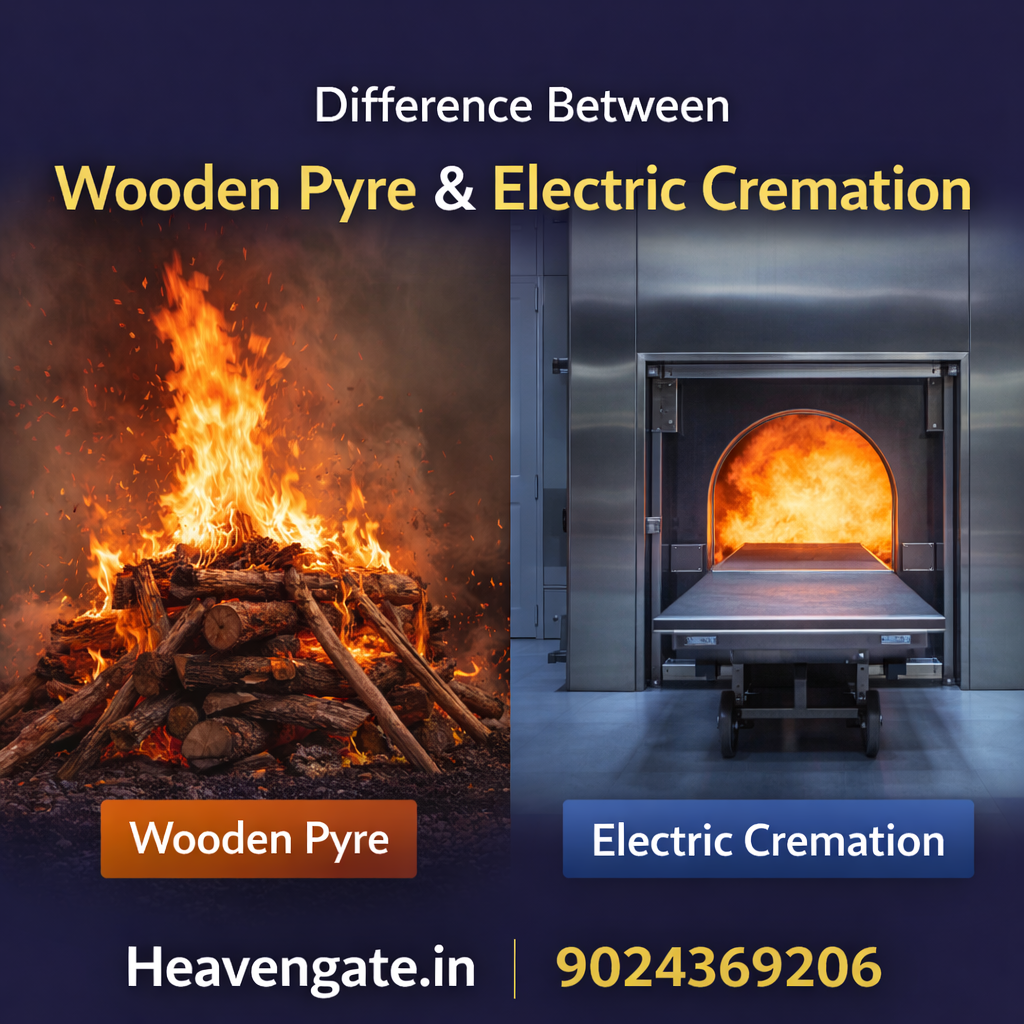

Cremation represents the final farewell in many Indian traditions. Families often face an important decision during this moment. They must choose between wooden pyre cremation and electric cremation. Both methods honor the deceased, yet they differ in process, cost, time, and environmental impact.
In cities like Jaipur, Delhi, Udaipur, Jodhpur, and Ajmer, both options remain available. Therefore, understanding their differences helps families make informed and peaceful decisions.
Why Understanding Cremation Methods Matters
Cremation is not only a ritual. It also reflects beliefs, emotions, and practical considerations.
Knowing the differences helps families:
Respect religious values
Manage time constraints
Control costs
Reduce environmental impact
Avoid last-minute confusion
Hence, awareness brings clarity during grief.
What Is Wooden Pyre Cremation?
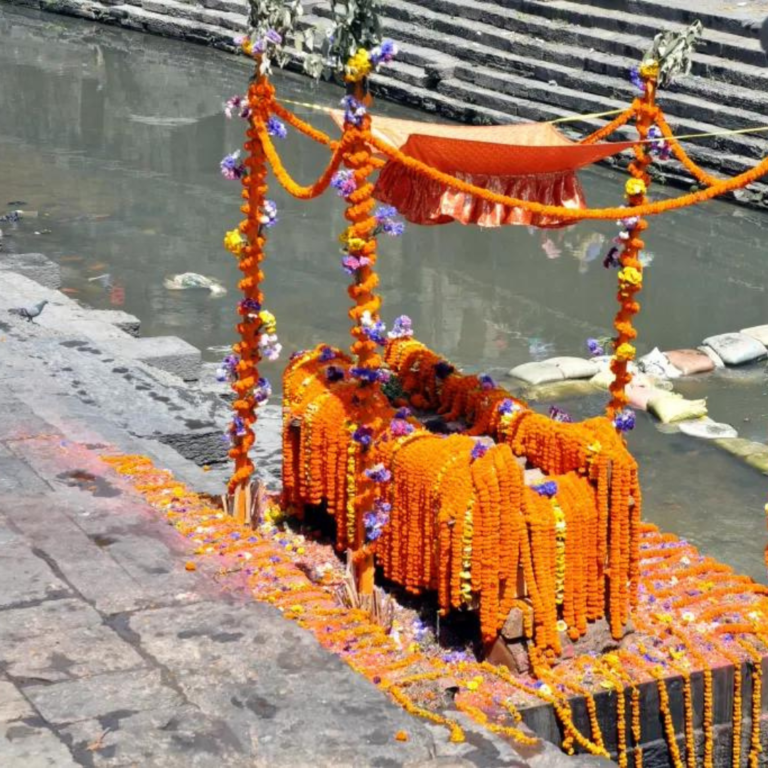
Wooden pyre cremation is the traditional Hindu method. It uses firewood to cremate the body in an open setting.
This method has existed for centuries. Therefore, many families feel spiritually connected to it.
Process of Wooden Pyre Cremation
The process follows several steps.
First, family members prepare the body according to rituals. Then, the body rests on stacked wooden logs. Afterward, the eldest son or close relative lights the pyre.
The cremation usually takes several hours. Rituals continue throughout the process.
Cultural Importance of Wooden Pyre Cremation
Wooden pyre cremation holds deep spiritual meaning.
Many believe:
Fire purifies the soul
Rituals help achieve moksha
Tradition connects generations
Therefore, families often choose this method despite challenges.
What Is Electric Cremation?
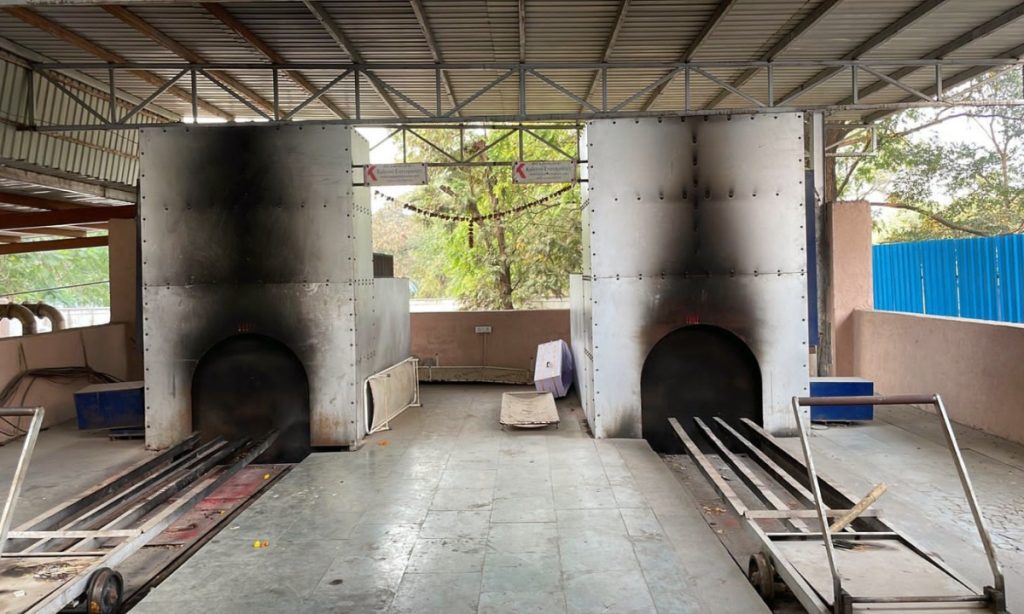
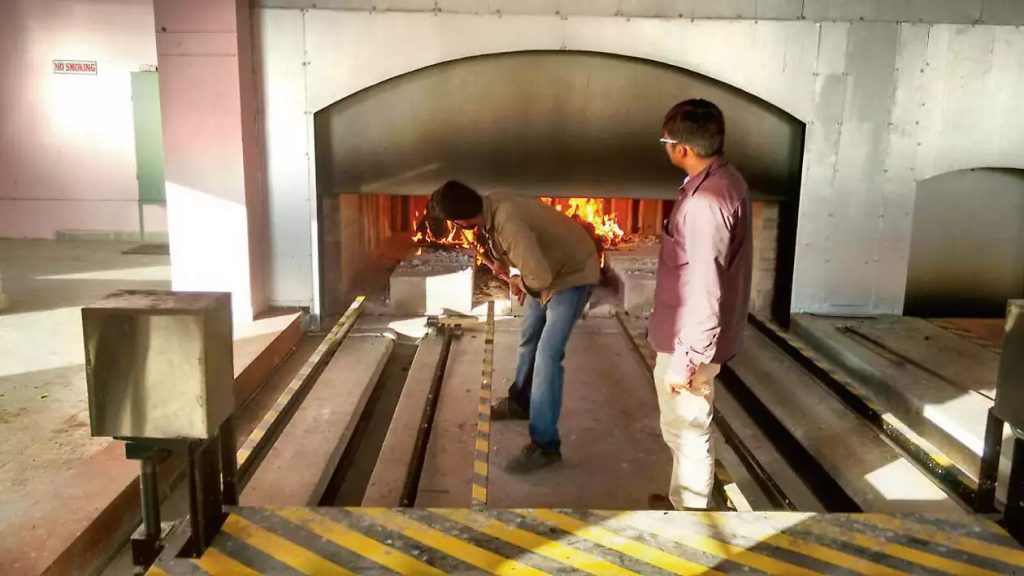
Electric cremation uses an electrically operated furnace. The process occurs inside a closed chamber.
This method represents a modern approach. It focuses on efficiency, cleanliness, and environmental protection.
Electric crematoria operate in many urban areas, including Delhi, Jaipur, and Udaipur.
Process of Electric Cremation
Electric cremation follows a streamlined process.
First, staff places the body inside the chamber. Then, controlled heat completes cremation within a fixed time. Ash collection happens afterward.
The entire process usually finishes faster than wooden pyre cremation.
Key Differences Between Wooden Pyre & Electric Cremation
Understanding side-by-side differences helps decision-making.
1. Time Required
Wooden pyre cremation takes longer. It may require three to five hours.
Electric cremation usually completes within one to two hours.
Therefore, electric cremation suits families with time constraints.
2. Cost Comparison
Wooden pyre cremation costs depend on wood quantity and ritual materials. Prices vary across cities.
Electric cremation usually costs less. Fixed pricing offers transparency.
Hence, electric cremation suits budget-conscious families.
3. Environmental Impact
Wooden pyres consume large amounts of wood. Smoke also contributes to air pollution.
Electric cremation reduces wood usage. Emissions remain controlled.
Therefore, eco-conscious families often prefer electric cremation.
4. Ritual Flexibility
Wooden pyre cremation allows full traditional rituals. Families actively participate.
Electric cremation limits some rituals due to enclosed chambers.
Thus, tradition-focused families often choose wooden pyres.
5. Hygiene and Cleanliness
Wooden pyre areas remain open. Weather and crowd conditions affect cleanliness.
Electric crematoria maintain controlled environments.
Therefore, hygiene remains better with electric cremation.

Religious Acceptance of Electric Cremation
Many families worry about religious acceptance.
Hindu scriptures emphasize fire, not fuel type. Therefore, electric cremation remains acceptable.
Several religious leaders now support eco-friendly practices.
Emotional Factors Influencing the Choice
Grief affects decisions deeply.
Wooden pyre cremation offers emotional closure through rituals.
Electric cremation offers calm surroundings and faster completion.
Hence, emotional comfort differs for each family.
Role of Professional Cremation Services
Professional support simplifies arrangements.
Service providers help with:
Cremation ground booking
Ritual coordination
Documentation
Transportation
(Internal link: Cremation Arrangement Services)
Transportation Support Before Cremation
Transportation plays a crucial role.
Families may require:
Hearse van services
Mortuary vans with freezer
Dead body transportation across cities
(Internal link: Hearse Van Service)
(Internal link: Dead Body Transportation Services)
Legal and Administrative Aspects
Both cremation methods require documentation.
Usually required:
Death certificate
Cremation ground booking slip
Professionals manage these steps efficiently.
Social Perception and Changing Trends
Urban families increasingly prefer electric cremation.
Reasons include:
Time efficiency
Environmental awareness
Smaller gatherings
However, rural areas still value wooden pyre traditions.
Religious Acceptance of Electric Cremation
Many families worry about religious acceptance.
Hindu scriptures emphasize fire, not fuel type. Therefore, electric cremation remains acceptable.
Several religious leaders now support eco-friendly practices.
Emotional Factors Influencing the Choice
Grief affects decisions deeply.
Wooden pyre cremation offers emotional closure through rituals.
Electric cremation offers calm surroundings and faster completion.
Hence, emotional comfort differs for each family.
Role of Professional Cremation Services
Professional support simplifies arrangements.
Service providers help with:
Cremation ground booking
Ritual coordination
Documentation
Transportation
(Cremation Arrangement Services)
Transportation Support Before Cremation
Transportation plays a crucial role.
Families may require:
Hearse van services
Mortuary vans with freezer
Dead body transportation across cities
( Hearse Van Service)
( Dead Body Transportation Services)
Legal and Administrative Aspects
Both cremation methods require documentation.
Usually required:
Death certificate
Cremation ground booking slip
Professionals manage these steps efficiently.
Social Perception and Changing Trends
Urban families increasingly prefer electric cremation.
Reasons include:
Time efficiency
Environmental awareness
Smaller gatherings
However, rural areas still value wooden pyre traditions.
Common Myths About Electric Cremation
Some believe electric cremation lacks respect. This belief is incorrect.
Respect comes from intention, not method.
Electric cremation maintains dignity and cleanliness.
How Families Can Decide the Right Option
Families should consider:
Religious beliefs
Budget
Time availability
Environmental concerns
Emotional comfort
Balanced decisions reduce regret later.
Future of Cremation Practices in India
India moves toward sustainable practices.
Electric cremation adoption continues to grow. However, wooden pyre traditions will remain for cultural reasons.
Both methods will coexist respectfully.
Final Thoughts
The difference between wooden pyre and electric cremation lies in tradition, time, cost, and environmental impact. Wooden pyre cremation preserves ancient rituals. Electric cremation offers a modern, eco-friendly alternative.
In cities like Jaipur, Delhi, and Udaipur, families now have informed choices. Selecting the right method ensures dignity, peace, and emotional comfort during the final farewell.
Call to Action (CTA)
If you need guidance for cremation arrangements, choose a trusted professional service.
📞 Call: 9024369206
🌐 Visit: Heavengate.in
Support is available 24/7 to help families with respect and care.
❓ FAQs – Funeral Services in India
1. Is electric cremation allowed in Hindu rituals?
Yes. Hindu scriptures focus on fire, not fuel source.
2. Which cremation method is more eco-friendly?
Electric cremation causes less environmental impact.
3. Is wooden pyre cremation more expensive?
Yes. Wood and ritual materials increase cost.
4. Can rituals be performed in electric cremation?
Yes. Many rituals occur before or after cremation.
5. Are electric cremation facilities available in Jaipur and Delhi?
Yes. Both cities offer multiple electric cremation centers.