

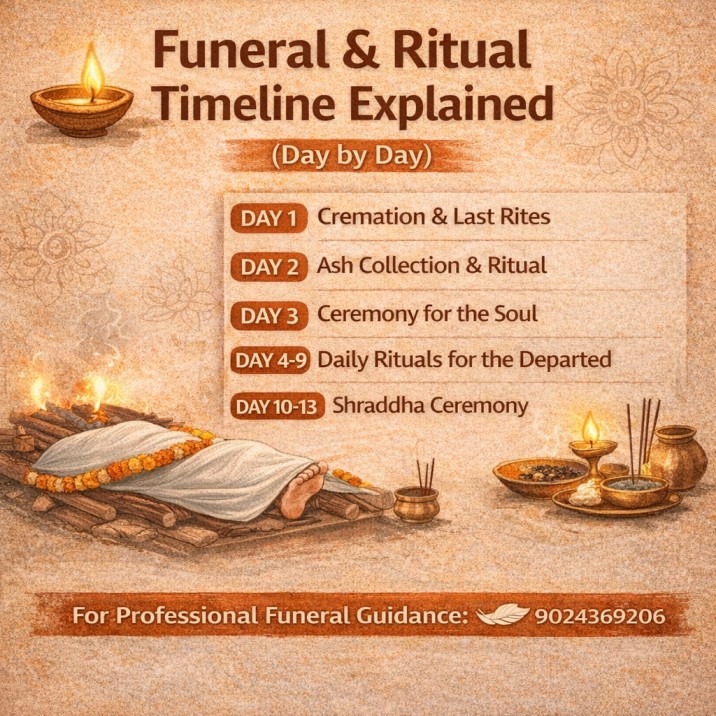

After a death, families follow a structured set of rituals. These practices bring emotional closure and spiritual peace. However, many people feel uncertain about the correct sequence. Therefore, understanding the funeral and ritual timeline helps families prepare calmly.
This guide explains the funeral & ritual timeline in India, day by day, in a clear and respectful way.
Day 1: Last Rites and Cremation or Burial
On the first day, final preparations begin soon after death. The body is bathed, dressed, and placed for viewing. Close family members gather for prayers.
Afterward, cremation or burial takes place according to religious customs. This step marks the formal farewell and is considered spiritually significant.
Day 2: Ash Collection and Sacred Rituals
On the second day, ashes are collected from the cremation ground. Family members perform prayers and offerings.
Later, ashes may be immersed in a sacred river or kept safely for immersion at a later time. This ritual symbolizes release and transition.
Day 3: Prayer for the Departed Soul
The third day focuses on prayer and remembrance. A small ceremony is conducted at home or a place of worship.
During this time, priests guide the family through rituals meant to offer peace to the departed soul. Moreover, relatives often visit to offer support.
Days 4 to 9: Daily Ritual Observances
Between days four and nine, daily rituals continue. These prayers vary by tradition and region.
Food offerings, lamp lighting, and chanting are commonly practiced. Therefore, these days are observed with simplicity and discipline.
Days 10 to 13: Shraddha and Final Rites
The final phase takes place between the tenth and thirteenth day. The Shraddha ceremony is performed to honor ancestors.
On completion, mourning rituals conclude. Families gradually return to normal routines while holding the departed in memory.
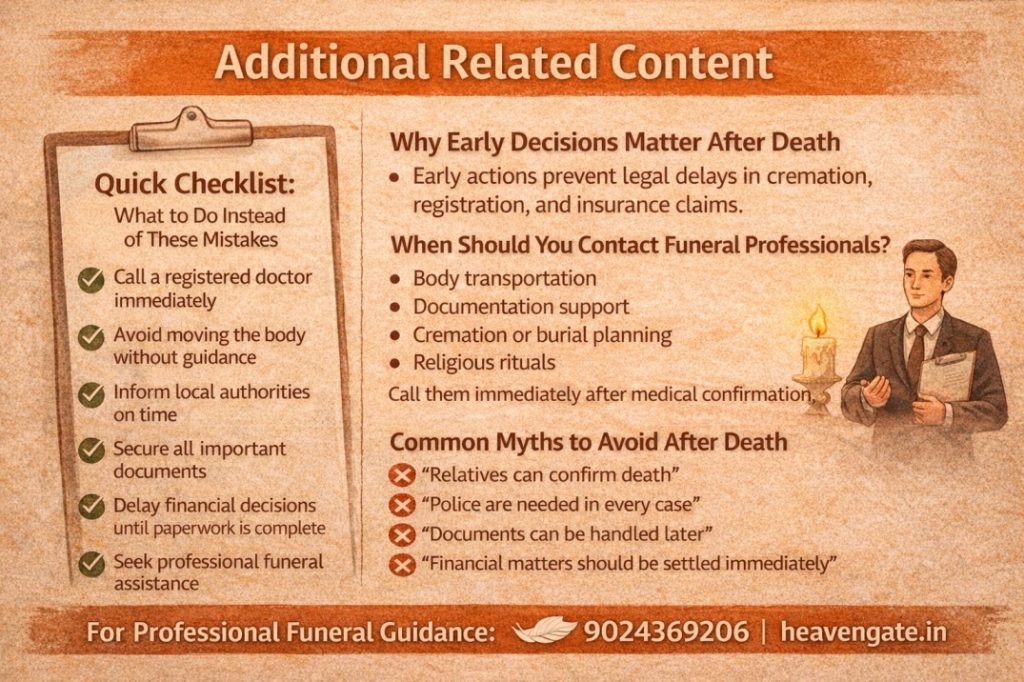
Why This Timeline Matters
Each day holds symbolic meaning. Following the correct sequence provides emotional stability and spiritual comfort.
Additionally, understanding the timeline prevents confusion and helps families plan arrangements properly.
How Professional Support Helps Families
Managing rituals during grief can feel overwhelming. Funeral service professionals assist with ritual planning, priest coordination, and logistical support.
As a result, families can focus on healing while traditions are followed correctly.
Conclusion
The funeral & ritual timeline explained day by day offers clarity during a difficult period. While grief cannot be avoided, informed preparation reduces stress.
With proper guidance and respectful support, families can observe traditions with dignity, peace, and understanding.
❓ FAQs – Funeral Services in India
1. What is the funeral and ritual timeline in India?
The funeral and ritual timeline in India follows a day-by-day process that includes last rites, cremation or burial, prayers, and post-funeral ceremonies lasting up to 13 days.
2. Are funeral rituals the same for all religions in India?
No, funeral rituals vary by religion, region, and family tradition. However, the general structure of prayers, remembrance, and closure remains similar.
3. Why are the first 13 days important after death?
The first 13 days are considered spiritually significant. Rituals performed during this period are believed to bring peace to the departed soul and emotional closure to the family.
4. Can rituals be shortened or modified?
Yes, rituals can be adjusted based on family circumstances, beliefs, or health and travel limitations. Priests often guide families on suitable alternatives.
5. Is Shraddha mandatory for every family?
Shraddha is traditionally performed in many Hindu families. However, practices may vary, and some families choose simplified ceremonies.
6. Can professional funeral services help with ritual planning?
Yes, professional funeral services assist with ritual scheduling, priest coordination, logistics, and documentation, helping families manage ceremonies smoothly.