

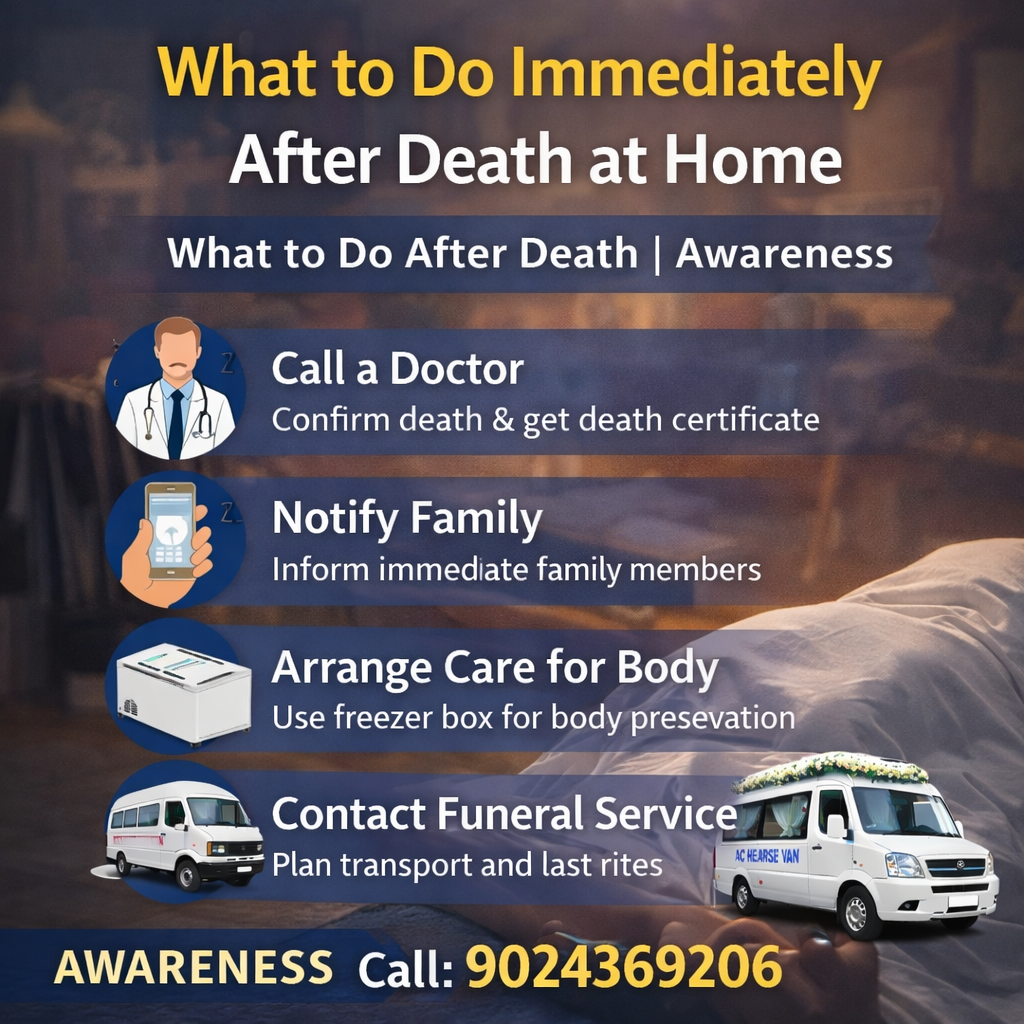

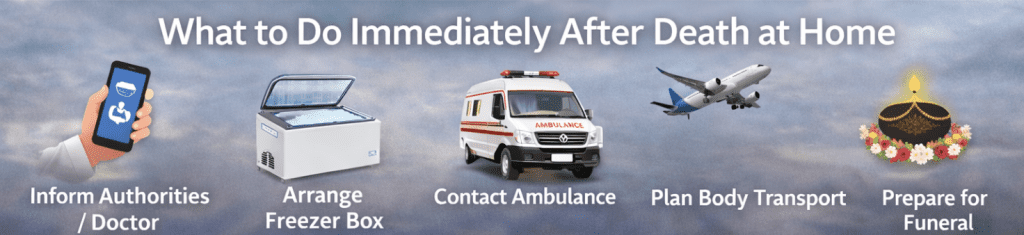
What to Do Immediately After Death at Home
When a death happens at home, families often feel confused and overwhelmed. However, taking the right steps early helps avoid stress, delays, and legal issues. This awareness guide explains what to do immediately after death at home in a clear and practical manner.
Stay Calm and Confirm the Death
First, remain calm and ensure the person has passed away.
Call a Doctor or Medical Professional
If death occurs naturally, contact the family doctor or a nearby medical practitioner. They confirm the death officially. Moreover, this step is necessary for documentation.
If death appears suspicious, inform the local police immediately.
Do Not Move the Body Immediately
After confirmation, avoid moving the body right away.
Why This Step Matters
Authorities may need to verify the situation. Therefore, moving the body too early can create complications. Keep the surroundings respectful and undisturbed.
Inform Close Family Members
Next, inform close relatives and important family members. This allows them to arrive on time and assist with decisions. As a result, responsibilities get shared smoothly.
Arrange a Freezer Box or Cooling Facility
In warm weather, body preservation becomes important.
Importance of a Freezer Box
A freezer box slows physical changes and maintains dignity. Moreover, it provides families enough time to arrange rituals and documentation.
Arrange Ambulance or Hearse Van Service
Once documents are in process, arrange transportation.
Transportation Options
Ambulance for hospital transfer
Hearse van for cremation or burial
Special vehicles for longer distances
Therefore, choosing the right vehicle prevents delays.
Collect Required Documents
Documentation is essential for further procedures.
Common Documents Needed
Medical death certificate
Identity proof of the deceased
Cremation or burial permission
Keeping documents ready saves valuable time.
Decide Funeral or Cremation Arrangements
After transport, plan the final rites.
Key Decisions to Make
Cremation or burial location
Religious or non-religious rituals
Pandit, priest, or last rites support
Consequently, early planning avoids confusion later.
If Death Involves Another City or Country
Sometimes, families need transportation beyond the city.
Airline Body Transportation
Airline transport helps when cremation or burial happens elsewhere. However, it requires additional permissions and embalming in some cases.
Seek Professional Support When Needed
Handling everything alone can feel overwhelming.
Why Professional Help Matters
Experienced service providers guide families step by step. Moreover, they handle logistics while families focus on emotional healing.
Final Thoughts
A death at home brings emotional pain and responsibility together. However, knowing what to do immediately after death helps families act with clarity and dignity. Awareness, preparation, and timely support make this difficult time more manageable.
❓ FAQs – What to Do Immediately After Death at Home
1. What is the first thing to do after a death at home?
First, stay calm and call a doctor or medical professional to confirm the death and issue a medical certificate.
2. Should the body be moved immediately after death at home?
No, the body should not be moved until death confirmation and necessary instructions from authorities are received.
3. Is a death certificate required if death happens at home?
Yes, a medical death certificate is mandatory for cremation, burial, and further legal procedures.
4. Why is a freezer box needed after death at home?
A freezer box helps preserve the body, especially in warm conditions, and gives families time to arrange rituals and documentation.
5. When should an ambulance or hearse van be arranged?
Once death is confirmed and documents are initiated, families can arrange an ambulance or hearse van for transportation.
6. What documents are required after death at home?
Common documents include the death certificate, identity proof of the deceased, and cremation or burial permission.